Mental health awareness has reached unprecedented heights, yet a massive gap remains between those who need help and those who actually receive it. Long wait times, high costs, and the lingering stigma of seeking therapy often stand in the way. But as technology continues to evolve, a powerful new ally has emerged in the mental health space: Artificial Intelligence.
AI is no longer just about optimizing search engines or generating art; it is actively reshaping how we approach emotional well-being. Here is a closer look at the importance of AI in mental wellness and how it is making self-care more accessible than ever.
1. 24/7 Accessibility and Support
Mental health struggles don’t operate on a 9-to-5 schedule. Anxiety, panic attacks, and depressive episodes often strike late at night when traditional clinics are closed. AI-driven wellness apps and chatbots provide immediate, round-the-clock support. While they don’t replace licensed human therapists, they act as an essential “first responder” for the mind, offering grounding exercises, cognitive behavioral techniques, and a safe space to vent at any hour.
2. Uncovering Hidden Patterns
One of the most powerful applications of AI is its ability to process complex data. In mental wellness, this translates to advanced mood tracking.
- Identifying Triggers: AI algorithms can analyze daily inputs—such as sleep patterns, physical activity, and journal entries—to identify subtle triggers that lead to stress or low mood.
- Predictive Insights: Over time, these systems learn your baseline and can gently alert you when your habits are trending toward burnout, allowing for proactive, rather than reactive, self-care.
3. A Judgment-Free Zone
For many, the fear of judgment is the biggest hurdle to starting therapy. It requires immense vulnerability to open up to another human being. Interacting with an AI can lower that barrier to entry. Because an AI is inherently objective and non-judgmental, users often feel more comfortable sharing their honest, unfiltered emotions. This makes it an excellent stepping stone for individuals who are hesitant to seek traditional counseling.
4. Hyper-Personalized Coping Strategies
We all process stress differently. What calms one person down might frustrate another. AI excels at personalization. By learning from your interactions, AI-powered mental health tools can curate a highly customized toolkit of resources—recommending specific breathing exercises, meditation tracks, or journaling prompts that have statistically proven to work best for your specific emotional state.
The Human-AI Synergy
It is important to note that AI is not here to replace human therapists, psychologists, or psychiatrists. Instead, it bridges the gap. AI acts as a daily companion that keeps you emotionally engaged between therapy sessions, ensuring that mental wellness becomes a consistent daily practice rather than an occasional appointment.
Take Control of Your Emotional World with Mood Physics
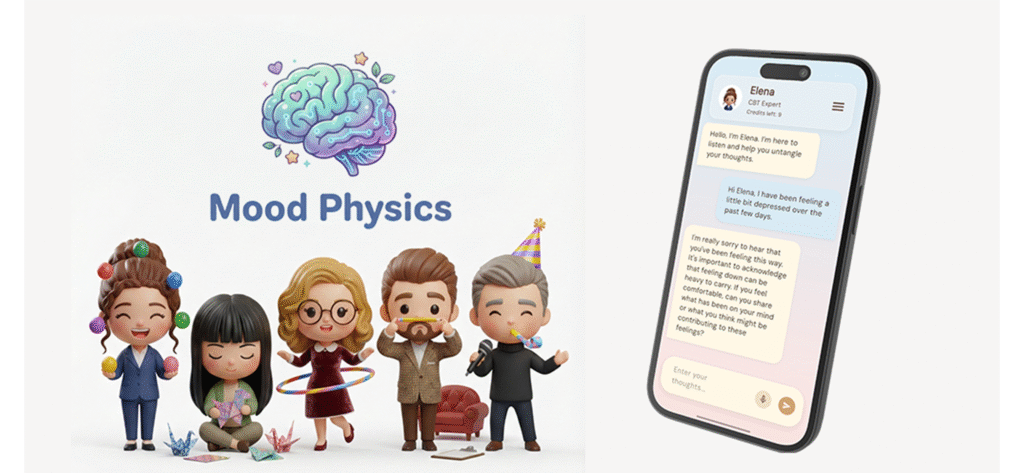
Understanding your emotions is the first step to mastering them. If you are looking for a smarter way to track, analyze, and elevate your mental well-being, we built Mood Physics for you.
Mood Physics uses intelligent tracking to help you understand the core mechanics of your mood, identify hidden triggers, and build healthier emotional habits.
Learn more about Mood Physics on the Google Play Store
Ready to start your journey to better mental wellness? Download the app today and see the data behind your daily mindset.
;