
In recent years, the conversation around mental health has shifted dramatically. What was once a topic discussed in hushed tones is now a central part of public discourse. Yet, as awareness grows, so does the demand for support. Traditional therapy, while invaluable, faces significant challenges, including high costs, long waiting lists, and a global shortage of qualified professionals. This is where artificial intelligence is beginning to make a profound impact.
AI is not here to replace human therapists. The nuance, empathy, and deep understanding that a human professional provides are irreplaceable. However, technology is carving out a vital role as a first line of defense and a consistent support system for mental wellness. By offering accessible, immediate, and personalized tools, AI is helping to bridge the gap between the need for care and the availability of resources.

Bridging the Accessibility Gap
One of the most significant barriers to mental health support is accessibility. For many, the process of finding a therapist, scheduling an appointment, and traveling to a clinic is daunting. For others, it is simply unaffordable. AI-driven tools are democratizing access to mental wellness resources.
Mobile applications and digital platforms powered by AI are available twenty-four hours a day, seven days a week. This round-the-clock availability is crucial. Mental health struggles do not adhere to business hours. Anxiety can spike late at night, and feelings of isolation often hit when traditional clinics are closed. An AI companion is always awake, ready to listen or guide a user through a calming exercise at the exact moment it is needed.
This immediacy can prevent minor stressors from escalating into more significant crises. Instead of waiting a week for a therapy session to discuss a difficult interaction or a moment of panic, individuals can process these events in real-time. This capability transforms mental healthcare from a reactive model, where treatment happens after problems become severe, to a proactive one, where maintenance and self-reflection are daily habits.
A Judgment-Free Zone
Stigma remains a powerful deterrent for many people seeking help. The fear of being judged, even by a professional, can prevent individuals from opening up about their deepest insecurities or darkest thoughts. AI offers a unique solution to this problem: a completely neutral, non-judgmental space.
Research suggests that some people feel more comfortable disclosing sensitive information to a machine than to a human. An AI does not have personal biases, it does not get tired, and it does not react with shock or disapproval. This perceived safety allows users to be radically honest about their feelings.
For someone grappling with social anxiety or shame, interacting with an AI can be a stepping stone. It allows them to practice vulnerability in a safe environment. Over time, this can build the confidence needed to seek human support or simply help the individual understand their own emotions better without the filter of social performance.

Simulating Therapeutic Modalities
Artificial intelligence in mental wellness is not just about having a chatbot to talk to; it is about applying proven therapeutic techniques in a digital format. Developers and psychologists are working together to train AI models on established psychological frameworks.
Cognitive Behavioral Therapy, or CBT, is one of the most common modalities adapted for AI. CBT focuses on identifying and challenging negative thought patterns. An AI can be programmed to recognize when a user is engaging in cognitive distortions, such as catastrophic thinking or overgeneralization, and gently prompt them to reframe their thoughts.
Similarly, AI can guide users through mindfulness and meditation exercises. By analyzing user input, the system can suggest specific breathing techniques or grounding exercises tailored to the user’s current state of mind. If a user reports feeling scattered, the AI might suggest a focus-based meditation. If they are anxious, it might guide them through a progressive muscle relaxation session.
Psychodynamic approaches, which explore how the past influences present behavior, are also being integrated into more advanced systems. While an AI cannot interpret the unconscious mind like a trained analyst, it can ask probing questions that encourage users to reflect on their history and patterns, fostering self-insight.
The Power of Data and Personalization
One of the inherent strengths of AI is its ability to process vast amounts of data. In a wellness context, this means the technology can learn from a user’s interactions to provide increasingly personalized support.
Over time, an AI tool can identify patterns that a user might miss. It might notice that a user’s mood tends to dip on Sunday evenings or that their anxiety correlates with poor sleep quality reported in a connected health app. By surfacing these insights, the AI empowers the user to make informed lifestyle changes.
This personalization extends to the style of interaction. Some individuals respond better to a direct, solution-oriented approach, while others need a more empathetic and listening-focused companion. Advanced AI systems can adapt their tone and style to match the user’s preference, creating a more effective and engaging support system.
The Human Element and Ethical Considerations
While the potential of AI in mental wellness is immense, it is vital to approach it with a clear understanding of its limitations. AI lacks true empathy. It can simulate a caring response based on patterns and programming, but it does not “feel” in the human sense.
There are complex ethical considerations regarding privacy and data security. Mental health data is incredibly sensitive, and users need to be assured that their conversations are private and secure. Reputable developers prioritize privacy, ensuring that data is encrypted and that users retain control over their information.
Furthermore, AI is not a substitute for professional treatment for serious mental health conditions. It is best viewed as a complementary tool—a digital wellness companion that supports self-care, promotes emotional intelligence, and helps manage everyday stress. For severe depression, trauma, or other clinical diagnoses, human intervention remains essential.
A Tool for Reflection: Mood Physics
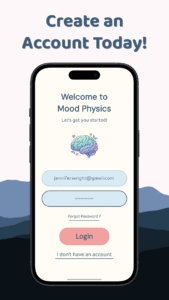
As we navigate the complexities of modern life, having a tool to help us pause and reflect is more valuable than ever. This is where apps like Mood Physics are making a difference.
Mood Physics is a supportive, AI-powered self-reflection app designed to help you slow down and gain clarity. It stands out by offering a diverse range of support through five unique AI personalities. Each personality is inspired by a different therapeutic approach, including CBT, mindfulness, Psychodynamic psychology, and Freudian techniques. This variety allows you to find the guidance style that resonates most with your current needs.
The app provides a safe, judgment-free space to explore your feelings. Whether you are looking to challenge unhelpful thinking patterns or simply need to vent about a stressful day, these thoughtful AI companions are there to listen. It is not about replacing a therapist; it is about having a dedicated space to organize your thoughts and navigate everyday emotions.
With a clean, peaceful interface designed to help you focus, Mood Physics prioritizes your mental clutter-clearing. Crucially, it is built with a “Privacy First” philosophy. No images are stored, and your data remains secure, allowing you to express yourself freely.
If you are feeling overwhelmed, stuck, or just want to understand yourself a little better, Mood Physics offers a calm digital sanctuary to reflect and reset.